Buy Transport Fever 2 at the Best Price
- PC
- PS5


Top retailers
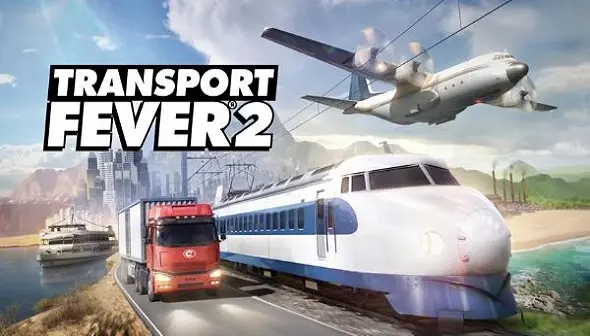
Transport Fever 2 lets you be the transportation tycoon you’ve always wanted to be. Create planes, trains, and boats to transport people and cargo wherever they need to go, and make a profit while you’re at it. Transportation is the lifeblood of any city, and you’re the one who runs it all.
Build the world. Explore and build in a huge open world. Choose between moderate, dry, and tropical climates with simulated wildlife and physics-based lighting. Use interactive tools and modular construction systems to craft your own railways and stations. Easily build airports entirely from the ground up. Create trains switches, rails, roads, signals, and buildings to fill your empire.
Build through time. Play three full-voiced and animated historic campaigns in three different countries. Will you be able to complete each of the campaign objectives?
Build for profit. Adapt according to your location and build the infrastructure that people need. Visualize traffic and emission through various data layers and reports. Make money from moving goods and people from one point to another. If you want to build the ultimate transport empire, look no further than Transport Fever 2.
Best deals for Transport Fever 2


Technical information
- Official website
- Categories : Casual, Simulation, Strategy
- Editor : Good Shepherd Entertainment
- Developer : Urban Games
- Release date : 11 December 2019
- System Requirements
-
- Minimum
- OS: Windows 7
- CPU : Intel i5-2300 / AMD FX-4300
- RAM : 8 GB
- GPU : GTX 560 / Radeon HD 7850
- Recommended
- CPU : Intel i7-4770k or AMD Ryzen 5 1600
- RAM : 16 GB
- GPU : GeForce GTX 1060 or Radeon RX 580, 4 GB VRAM
- Age Rating
- Steam Deck: Verified
Supported languages
| Interface | Audio | Subtitles | |
|---|---|---|---|
| English | |||
| Japanese | |||
| Polish | |||
| Chinese (Simplified) | |||
| Russian | |||
| French | |||
| Chinese (Traditional) | |||
| Dutch | |||
| Spanish (Spain) | |||
| German |


- Also Published By Good Shepherd Entertainment
-
 670.61₹MoroiGamersGate
 -
 824.22₹Demon's MirrorGAMESEAL
 -
 16.03₹DicefolkKinguin
 -
 99.07₹ShowgunnersKinguin
 -
 118.01₹The Eternal CylinderKinguin
 -
 58.28₹Hard West 2Kinguin
 -
 119.49₹Monster TrainEneba
 -
 38.61₹Black Future '88Kinguin
 -
 305.77₹Phantom DoctrineFanatical
 -
 31.33₹SemblanceKinguin
- Most Popular
-
1969.00₹WardogsSteam
-
1139.70₹ValheimLOADED
-
2249.00₹Diablo 4 Lord of HatredSteam
-
1649.00₹Halloween The GameSteam
-
3999.00₹Blood of DawnwalkerSteam
-
3266.07₹Crimson Desert EnhancedHRKGAME
-
4399.00₹Onimusha Way of the SwordGamersGate
-
4677.50₹Forza Horizon 6LootBar
-
1700.00₹RuneScape DragonwildsSteam
-
6075.75₹Grand Theft Auto 6Eneba
- New games
-
775.20₹Sniper DanGamersGate
-
1245.14₹BloomKeeperFanatical
-
4536.74₹Trails in the Sky 2nd ChapterKinguin
-
478.31₹WoodoFanatical
-
2099.00₹Train Sim World 7Steam
-
2499.00₹Active MatterSteam
- Available soon
-
915.00₹The Walking Dead Streets of SurvivalSteam
-
919.00₹Graveyard Keeper 2Steam
-
3593.54₹SILENT HILL TownfallGreenmanGaming
-
2543.95₹Garfield Escape from MondayInstant Gaming
- Trending Now
- Summer Event 2026 Wrap-Up & Leaderboard01/09/26Gaming News
- BlizzCon 2026: Diablo V, a new StarCraft, and World of Warcraft: Forever13/09/26Gaming News
- Warhammer 40,000: Space Marine 2 Patch 15 Brings Chaos to Siege04/09/26Gaming News
- GTA VI gets two flashy limited-edition DualSense controllers before release04/09/26Hardware News
- The Blood of Dawnwalker is already a hit on Steam03/09/26Gaming News
- News, Good deals
- GARFIELD – Escape from Monday sends Garfield on a new adventure2 hours agoGaming News
- The Walking Dead: Streets of Survival Is Almost Here – What to Know4 hours agoGaming News
- Monster Hunter Wilds: Character Edit Changes Coming with Ascendance4 hours agoGaming News
- Dungeon Brawls turns dungeon crawling into roguelike chaos5 hours agoGaming News
- No Man’s Sky Celebrates 10 Years With "Our Journey Continues"6 hours agoGaming News
- dLcompare Recaps the Latest Games #1216/09/26Gaming News
answering the message of