Buy Thea: The Awakening at the Best Price
- PC
- PS4


Top retailers
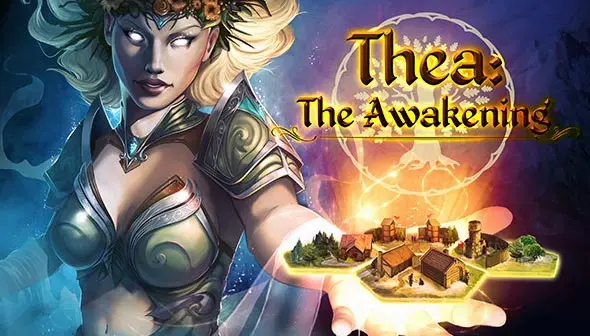
When the gods fall silent and the world collapses into shadow, humanity's last light flickers in a single, struggling village. Thea: The Awakening invites you into a darkly beautiful world inspired by Slavic mythology, where every dawn is uncertain and every decision could be your last. Part survival game, part strategy, and part role-playing experience, it offers a haunting twist on the 4X genre where exploration, faith, and sacrifice replace conquest and domination.
In Thea: The Awakening, you guide a small band of survivors trying to rebuild amidst the ashes of a dying world. Your people rely on you, a newly reawakened deity, to gather resources, craft tools and weapons, and defend them against horrors born of the eternal Darkness. Every resource counts, every meal matters, and every choice shapes their fate.
The world of Thea: The Awakening is procedurally generated, ensuring no two journeys are ever the same. Each expedition brings new discoveries, strange events, and deadly encounters that can be resolved through combat, diplomacy, or cunning. Its unique card-based conflict system adds depth and unpredictability to every challenge, allowing multiple approaches to survival.
The game abandons the power fantasies of traditional strategy games in favor of something more human, a tale of endurance, myth, and fragile hope. Instead of building empires, you nurture a community. Instead of waging war, you wrestle with hunger, sickness, and superstition. The game's folklore-infused atmosphere draws deeply from Slavic legends, filling the world with ancient spirits, cursed beasts, and the whispers of forgotten gods.
Thea: The Awakening rewards patience, planning, and courage. It challenges players to adapt to an ever-changing landscape and to balance survival with faith. Every playthrough offers new stories, and every story feels personal, shaped by your decisions, your people, and your will to endure.
Best deals for Thea The Awakening


Technical information
- Official website
- Categories : Role-Playing, Strategy
- Editor : MuHa Games
- Developer : MuHa Games
- Release date : 20 November 2015
- Latest patch: 19/03/18
- System Requirements
-
- Minimum
- OS: Windows 7 (32-bit)
- CPU : Dual Core 2.0 GHz
- RAM : 4 Gb
- GPU : 512Mb Video
- Storage : 1 Gb
- Recommended
- CPU : Quad Core
- RAM : 8 GB
- GPU : DirectX 11 class GPU with 2GB VRAM
- Storage : 3 GB
- Age Rating
-
Supported languages
| Interface | Audio | Subtitles | |
|---|---|---|---|
| English | |||
| Polish | |||
| German | |||
| French | |||
| Russian | |||
| Spanish (Spain) | |||
| Japanese | |||
| Korean | |||
| Chinese (Simplified) |


- Also Published By MuHa Games
-
 880.00₹Project TheaSteam
 -
 189.27₹Thea 2 The ShatteringEneba
- Most Popular
-
1137.56₹ValheimLOADED
-
1649.00₹Halloween The GameSteam
-
3999.00₹Blood of DawnwalkerSteam
-
2218.26₹Diablo 4 Lord of HatredKinguin
-
4399.00₹Onimusha Way of the SwordGamersGate
-
3397.32₹Crimson Desert EnhancedKinguin
-
2499.00₹STAR WARS Zero CompanySteam
-
3999.00₹NBA 2K27Steam
-
4668.74₹Forza Horizon 6LootBar
-
3079.00₹Resident Evil RequiemSteam
- New games
-
1889.00₹Train Sim World 7Steam
-
336.75₹CloudscrapersGamersGate
-
993.48₹Golden SwirlK4G
-
6779.88₹EA Sports NHL 27Difmark
-
345.96₹Magical BlushKinguin
-
841.01₹BrokenLore DON’T LIEKinguin
- Available soon
-
915.00₹The Walking Dead Streets of SurvivalSteam
-
919.00₹Graveyard Keeper 2Steam
-
2602.33₹Total War WARHAMMER III – Lords of the End TimesFanatical
-
3586.81₹SILENT HILL TownfallFanatical
- Trending Now
- Summer Event 2026 Wrap-Up & Leaderboard01/09/26Gaming News
- BlizzCon 2026: Diablo V, a new StarCraft, and World of Warcraft: Forever13/09/26Gaming News
- Warhammer 40,000: Space Marine 2 Patch 15 Brings Chaos to Siege04/09/26Gaming News
- GTA VI gets two flashy limited-edition DualSense controllers before release04/09/26Hardware News
- The Blood of Dawnwalker is already a hit on Steam03/09/26Gaming News
- News, Good deals
- Is Logan enough for Marvel's Wolverine to succeed?21 hours agoGaming News
- Call of Duty: Modern Warfare 4’s Pre-Order Bonus is special on Xbox10/09/26Gaming News
- Sucker for Love: Crush Landing Turns Cosmic Horror Into Romance10/09/26Gaming News
- No Man’s Sky Overhauls Space with the COSMOS 7.0 Update09/09/26Gaming News
- Valheim officially leaves Early Access with version 1.009/09/26Gaming News
- Salvation: Echoes of War Traps You in a WWII Nightmare08/09/26Gaming News
answering the message of