Buy Sekiro Shadows Die Twice at the Best Price
- PC
- PS4
- XboxOne
- Xbox Series X


Top retailers
From the creators of the Dark Souls series, Bloodborne, and Armoured Core, here comes the action-filled adventure game where players take revenge to the next level, restore lost honor, and kill ingeniously.
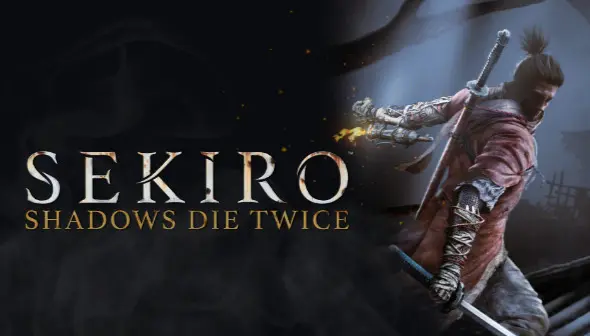
In Sekiro Shadows Die Twice, you are a one-armed wolf, a fallen ninja warrior who's been rescued from the brink of death. The dangerous clan of Ashina who wants to kill your young lord will go to great lengths to kill you, but as a loyal servant and warrior, you are bound to protect the young lord of an ancient bloodline. Nothing will stop you from your finishing your quest to get back your honor and keep your word of putting the young lord’s life ahead of yours.
The game explores Japan’s Sengoku period in the late 1500s. This period is filled with brutality and conflict, and as you come face to face with your enemies, you get to unleash your deadly weapons and epic ninja skills in bloody battles. The gameplay of Sekiro Shadows Die Twice is similar to the one in other FromSoftware games. It has the same bloody plot, precise combat system, and it also lets you explore across a fantastical depiction of Japan. The game offers a minimal tutorial as it only teaches you how to wield a sword and you’re pretty much left on your own after that. The good thing is that you are equipped with a katana, a makeshift arm, and an array of tools for combat. The makeshift arm can be replaced and customized with secondary weapons, and when it's used correctly, it can leave enemies dead on the ground.
Sekiro Shadows Die Twice is a game that gives you a first-hand experience of being a ninja with a sacred vow of saving a life to live by.
Best deals for Sekiro Shadows Die Twice



Technical information
- Official website
- Categories : Action, Adventure, Story-Rich
- Editor : Activision
- Developer : FromSoftware
- Release date : 21 March 2019
- System Requirements
-
- Minimum
- OS: Windows 7 64-bit
- CPU : Intel Core i3-2100, AMD FX-6300
- RAM : 4 GB
- GPU : GeForce GTX 760, Radeon HD 7950
- Storage : 25 GB
- Recommended
- CPU : Intel Core i5-2500K | AMD Ryzen 5 1400
- RAM : 8 GB
- GPU : GeForce GTX 970 | Radeon RX 570
- Age Rating
-

- Steam Deck: Verified
Supported languages
| Interface | Audio | Subtitles | |
|---|---|---|---|
| English | |||
| Korean | |||
| Spanish (Spain) | |||
| Chinese (Traditional) | |||
| German | |||
| Thai | |||
| Japanese | |||
| Portuguese (Brazil) | |||
| Russian | |||
| Chinese (Simplified) | |||
| Polish | |||
| French | |||
| Italian |


-
SSDT News
-
Sekiro: Shadows Die Twice anime confirmed at Gamescom22/08/25
-
Domain registration hints at Sekiro: Shadows Die Twice anime adaptation12/08/25
-
From Software adds content to Sekiro: Shadows Die Twice and talks about Elden Ring02/11/20
-
Sekiro: Shadows Die Twice is getting a new gameplay mode and some other surprises30/07/20
-
Sekiro: Shadows Die Twice manga is coming this month01/05/19
-
Sekiro: Shadows Die Twice surprised players with an earlier launch22/03/19
-
Sekiro: Shadows Die Twice – a new trailer is published just days before the release19/03/19
-
Sekiro: Shadows Die Twice trailer features Lady Butterfly20/02/19
-
Sekiro: Shadows Die Twice PC Requirements revealed09/02/19
-
New Story Trailer for Sekiro: Shadows Die Twice08/02/19
- Also Published By Activision
-
4999.00₹Call of Duty Modern Warfare 4Steam
-
2972.95₹Call of Duty Black Ops 7Kinguin
-
 2474.00₹Tony Hawk's Pro Skater 3 + 4Steam
 -
2368.69₹Call of Duty Black Ops 6GAMESEAL
-
 2517.03₹CoD Modern Warfare 3GAMESEAL
 -
 1193.23₹Crash Team RumbleEneba
 -
 1349.00₹CoD Black Ops Cold WarSteam
 -
583.69₹CoD Modern Warfare 2K4G
- Most Popular
-
1649.00₹Halloween The GameSteam
-
4399.00₹Onimusha Way of the SwordGamersGate
-
3999.00₹Blood of DawnwalkerSteam
-
2215.94₹Diablo 4 Lord of HatredKinguin
-
3393.78₹Crimson Desert EnhancedKinguin
-
3999.00₹NBA 2K27Steam
-
2499.00₹STAR WARS Zero CompanySteam
-
4663.87₹Forza Horizon 6LootBar
-
6108.69₹Grand Theft Auto 6Eneba
-
3079.00₹Resident Evil RequiemSteam
- New games
-
7247.95₹EA Sports NHL 27Eneba
-
755.00₹Welcome to ElderfieldSteam
-
1969.00₹WardogsSteam
-
719.00₹Shroom and GloomSteam
-
2999.00₹HOT WHEELS Infinite RushSteam
-
506.12₹The Alighieri Circle Dante's BloodlineDifmark
- Available soon
-
1889.00₹Train Sim World 7Steam
-
915.00₹The Walking Dead Streets of SurvivalSteam
-
919.00₹Graveyard Keeper 2Steam
-
3583.07₹SILENT HILL TownfallFanatical
-
Feed
-
PC Gamers, come rate my videogame vinyl collection and decide whether it was worth the $$$06/06/26 PC Gamer
-
Worried about Onimusha's difficulty after the demo? I have the death count to prove the full game's got teeth01/09/26 PC Gamer
-
Onimusha: Way of the Sword proves the parry formula is far from stale, you just need to get freaky with it06/09/26 PC Gamer
- Trending Now
- Summer Event 2026 Wrap-Up & Leaderboard01/09/26Gaming News
- BlizzCon 2026: Diablo V, a new StarCraft, and World of Warcraft: Forever13/09/26Gaming News
- Warhammer 40,000: Space Marine 2 Patch 15 Brings Chaos to Siege04/09/26Gaming News
- GTA VI gets two flashy limited-edition DualSense controllers before release04/09/26Hardware News
- The Blood of Dawnwalker is already a hit on Steam03/09/26Gaming News
- News, Good deals
- Is Logan enough for Marvel's Wolverine to succeed?about 1 hour agoGaming News
- Call of Duty: Modern Warfare 4’s Pre-Order Bonus is special on Xbox10/09/26Gaming News
- Sucker for Love: Crush Landing Turns Cosmic Horror Into Romance10/09/26Gaming News
- No Man’s Sky Overhauls Space with the COSMOS 7.0 Update09/09/26Gaming News
- Valheim officially leaves Early Access with version 1.009/09/26Gaming News
- Salvation: Echoes of War Traps You in a WWII Nightmare08/09/26Gaming News
answering the message of