Buy The Last Spell at the Best Price
- PC
- PS5
Top retailers
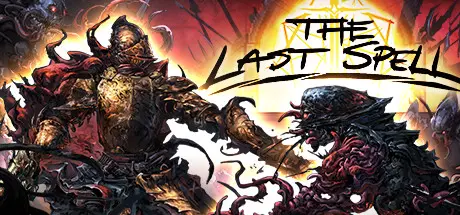
The Last Spell developed by Ishtar Games and published by The Arcade Crew is an intense tactical RPG with roguelite elements that will challenge even the most experienced gamers.
In The Last Spell, players take on the role of a hero who leads a group of survivors in their quest to save a besieged city from certain destruction. During your crusade, you will face countless hordes of monsters, each one deadlier than the last, as well as difficult moral choices to make along the way. You must strategically use special abilities, powerful spells, and an array of weapons to outwit your enemies and prevent them from taking your home. Along the way, you can equip gear for yourself or upgrade buildings within your camp for better protection against enemy assaults.
The Last Spell also features procedurally generated levels which ensure no two playthroughs are ever alike. With every successful battle won you gain experience points which can be used to improve both stats and skills of your character so they can face greater challenges ahead with confidence. As if this wasn’t enough The Last Spell also offers online leaderboards where players can compete against one another in order to claim fame amongst their peers.
Best deals for The Last Spell


Technical information
- Official website
- Categories : Action, Role-Playing, Strategy, Rogue-Like, Tower Defense
- Editor : Nacon
- Developer : Ishtar Games
- Mode(s):
-
- Solo ( At Launch)
- Release date : 9 March 2023
- Latest patch: 1.3.32.10 - 02/04/26
- System Requirements
-
- Minimum
- OS: Windows 7
- CPU : Core i5 3470 / FX-8370
- RAM : 4 GB
- GPU : GeForce GTX 650 / Radeon HD 7770
- Storage : 2 GB
- Recommended
- OS: Windows 10
- CPU : Intel Core i5-8400 or AMD Ryzen 5 2600
- RAM : 8 GB
- GPU : GeForce GTX 660, 2 GB or Radeon HD 7870, 2 GB
- Age Rating
-
- Steam Deck: Verified
Supported languages
| Interface | Audio | Subtitles | |
|---|---|---|---|
| English | |||
| Japanese | |||
| Chinese (Simplified) | |||
| Chinese (Traditional) | |||
| French | |||
| German | |||
| Russian | |||
| Portuguese (Portugal) | |||
| Spanish (Spain) | |||
| Portuguese (Brazil) | |||
| Korean | |||
| Ukrainian |


DLC available
-
 400.00₹The Last Spell Tales of TormentSteam
 -
 400.00₹The Last Spell Elves of AmberwaldSteam
 -
 400.00₹The Last Spell Dwarves of RunenbergSteam
- Also Published By Nacon
-
 1079.20₹The Mound Omen of CthulhuAllyouplay
 -
 1319.00₹Pro Cycling Manager 26Steam
 -
 1649.00₹Tour de France 2026Steam
 -
 2029.46₹Cthulhu The Cosmic AbyssK4G
 -
 1120.00₹Dragonkin The BanishedAllyouplay
 -
 1767.40₹GreedFall 2 The Dying WorldEneba
 -
 938.10₹Dead in AntaresKinguin
 -
 1792.28₹Styx Blades of GreedK4G
 -
 4399.00₹Cricket 26 The Official Game of the AshesPlayStation Store
- Most Popular
-
1649.00₹Halloween The GameSteam
-
4399.00₹Onimusha Way of the SwordGamersGate
-
3999.00₹Blood of DawnwalkerSteam
-
2215.94₹Diablo 4 Lord of HatredKinguin
-
3393.78₹Crimson Desert EnhancedKinguin
-
3999.00₹NBA 2K27Steam
-
2499.00₹STAR WARS Zero CompanySteam
-
4561.02₹Forza Horizon 6HRKGAME
-
6112.05₹Grand Theft Auto 6Eneba
-
3079.00₹Resident Evil RequiemSteam
- New games
-
8046.50₹EA Sports NHL 27Eneba
-
755.00₹Welcome to ElderfieldSteam
-
1969.00₹WardogsSteam
-
719.00₹Shroom and GloomSteam
-
2999.00₹HOT WHEELS Infinite RushSteam
-
501.24₹The Alighieri Circle Dante's BloodlineDifmark
- Available soon
-
1889.00₹Train Sim World 7Steam
-
915.00₹The Walking Dead Streets of SurvivalSteam
-
919.00₹Graveyard Keeper 2Steam
-
3583.07₹SILENT HILL TownfallFanatical
- Trending Now
- Summer Event 2026 Wrap-Up & Leaderboard01/09/26Gaming News
- BlizzCon 2026: Diablo V, a new StarCraft, and World of Warcraft: Forever13/09/26Gaming News
- Warhammer 40,000: Space Marine 2 Patch 15 Brings Chaos to Siege04/09/26Gaming News
- GTA VI gets two flashy limited-edition DualSense controllers before release04/09/26Hardware News
- The Blood of Dawnwalker is already a hit on Steam03/09/26Gaming News
- News, Good deals
- Call of Duty: Modern Warfare 4’s Pre-Order Bonus is special on Xbox10/09/26Gaming News
- Sucker for Love: Crush Landing Turns Cosmic Horror Into Romance10/09/26Gaming News
- No Man’s Sky Overhauls Space with the COSMOS 7.0 Update09/09/26Gaming News
- Valheim officially leaves Early Access with version 1.009/09/26Gaming News
- Salvation: Echoes of War Traps You in a WWII Nightmare08/09/26Gaming News
- Cat Me If You Can launches, continuing its journey to win over players07/09/26Gaming News
answering the message of